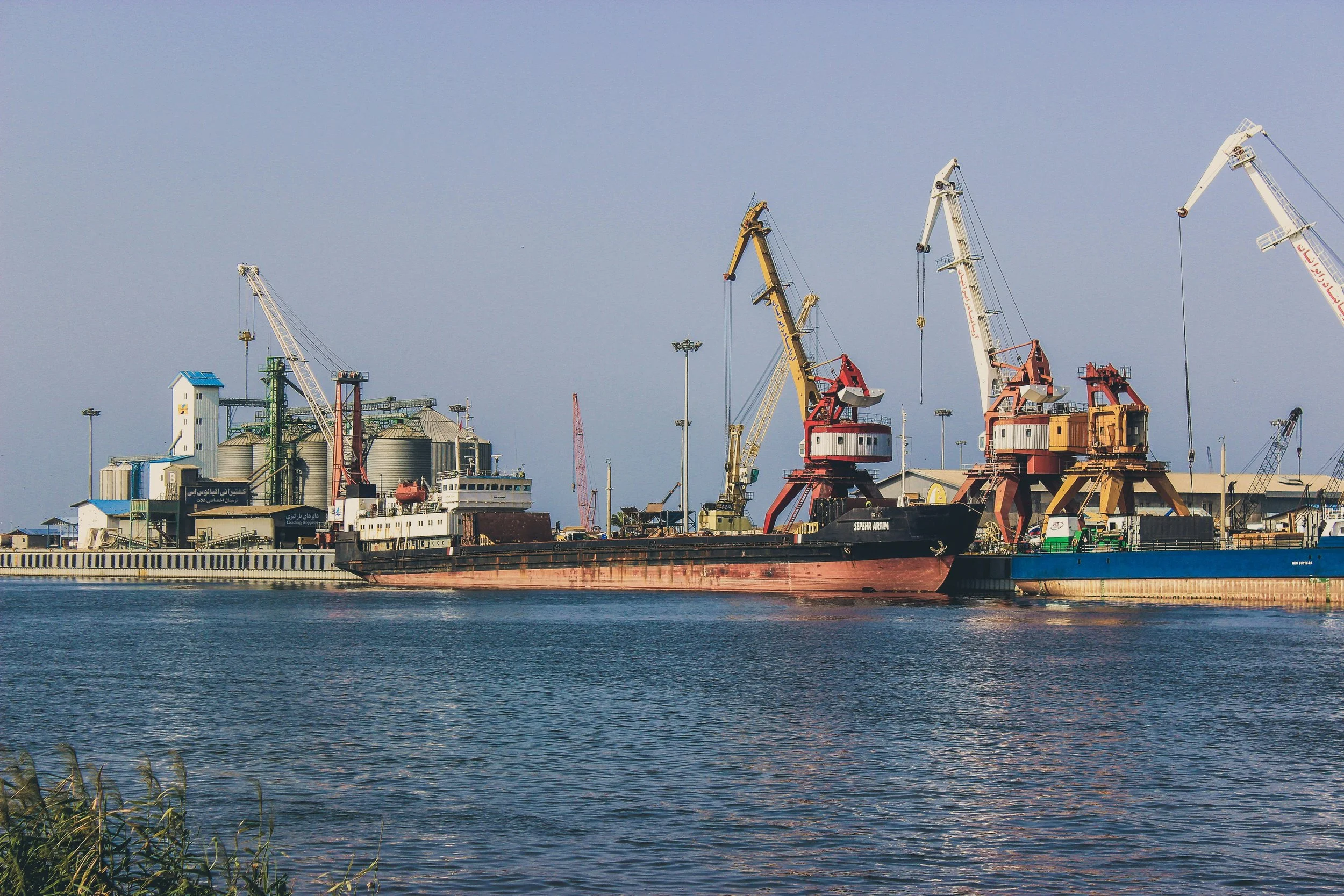
Bandar Anzali, Gilan Province, Iran, Amir Nik, Unsplash
Over the past six years, I've learned that a particular kind of sociopolitical moment doesn't announce itself, but you can feel it if you're paying attention. Core systems are shifting. Pieces of information are circulating without anyone connecting them. And most people keep moving, assuming there's still time to adjust if things get serious enough.
I first saw this with the COVID-19 pandemic. By late 2019, the signs were visible that this was a harmful virus that spread quickly. News was spreading across the world and only the most xenophobic narratives were peaking through to us. The news wasn't being immediately translated into what this meant for how we worked, how we gathered, who would be most exposed when things moved fast. While many places closed or adjusted service, the overall approach was reactive. We prioritized doing business as usual and ignoring precautions, until it was too late.
It landed hardest on people least able to absorb it: gig workers, home care aides, housecleaners, people who are immunocompromised. So many of us got hurt. I got hurt.
With curiosity and concern, I've been watching these signs take shape around the world when it comes to our oil as the US-led Iran oil conflict has compromised global supply.
Countries across Asia are already responding to the potential of not just expensive oil, but no oil at all. Japan, Thailand, Vietnam, Pakistan for example, are encouraging remote work and shorter work-weeks to conserve fuel. The European Commission is pushing energy-saving measures and recommending limited road and air travel. There are reports that Europe may run out of jet fuel in the next six weeks.
There's a not-so-quiet preparation happening in other parts of the world that we haven't discussed in the United States. Here we go again - reactivity without sense making. Moving as if nothing can impact us until we have no choice but to move, when the costs are even higher than they are now. A reality deeply impacted by how the richest and most elite people will negligibly feel these changes and challenges - in fact many will be more enriched by them.
Why it goes beyond the pump
Current talk about oil stays at the price at the pump or the barrel (from an average $65/barrel last year to $110/barrel), yet gas prices and availability shape how goods are manufactured, how food is transported, how the materials we use every day are made.
This is where it stops being abstract. What happens to travel when it becomes less reliable and/or more expensive? What happens to teams when everything from imported goods in plastic containers to the gas used to fuel the tractors involved in our food supply goes up? What happens as this collides with the work necessary to keep our elections free and fair? What happens to participation, in a meeting, an event, a gathering, when showing up starts to cost more in ways that aren't always visible or named?
How we’re moving
At Brava, we've started making decisions with those questions in mind. For example, we have been building toward a large in-person gathering in November. The default would have been to keep planning and adjust later if conditions shifted. But that assumption - that there will be time to change and that costs may go down - doesn't reflect our current reality. So we made a different call. We're moving a July retreat with our facilitators to virtual and redirecting those resources toward November: more scholarships, more flexibility, more room for people to actually participate if things get harder.
The tradeoff is frankly a little heartbreaking, it centers the financial well-being of our team and community but it does sacrifice some of the organizational culture benefits of an in-person retreat with our facilitation team. We are definitely grieving not having more time together face to face. But it's a decision we want to make now, while we still have room to make choices that can benefit the team in some way.
Balancing events, staff, and community needs
These moments aren't just economic; they're also redistributive. When costs rise and access narrows, someone absorbs the shift. Leadership doesn't prevent that from happening, but it does shape who carries the weight. The United States may not be the hardest hit in all of this, but it will be felt in the bottom 80% of our income distribution. At least.
If you're planning events, building teams, or organizing communities right now, I think it's worth asking: who on your team will feel this first if things get harder? What are you asking of people if conditions tighten? What tradeoffs can you make now, while you still have options, that might reduce the load your most vulnerable people will carry later?
I hope I'm wrong about where this is heading. But if I'm not, I don't want to be caught in the same position I've been in before: reacting to something that was already in motion. I'd rather move a little early, even imperfectly, and give the people I'm responsible to a little more room to breathe. I’m hoping we may be able to give you the impetus to do the same.
-Karla